Advertorial · Home Energy
Electricity Bills Keep Climbing — and Most UK Homes Still Can't Put Solar on the Roof
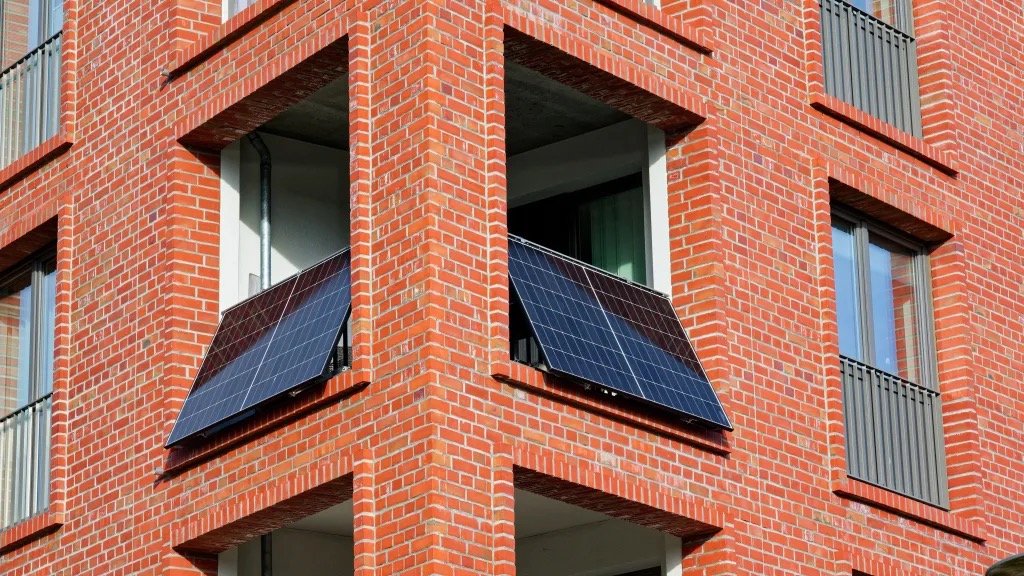
A portable panel sits in a sunny garden, yard or balcony — not on the roof
A micro-inverter turns that DC into 230V and feeds a standard 13A outdoor socket
The house uses that power first, so it draws less from the grid while the sun is out
Quick answer
What it is: a complete plug-in solar kit — panel(s), a matched micro-inverter and a UK 13A plug — that generates electricity without roof scaffolding or a hardwired inverter in the loft.
Cost / time: compliant 800W kits are typically a few hundred pounds. Sitting the kit in a sunny spot and plugging it in is the work of an afternoon, provided the outdoor socket and permissions are in place.
Roof solar is still the bigger system. It is also the one most renters, leaseholders and many terraces never get near. Plug-in solar is the smaller, newer route: less power, fewer permissions in some cases, and a hard cap on output. That is the honest frame. It is not a replacement for loft insulation, a heat pump or a full PV array.
Where the extra money on the electricity bill actually goes
Ofgem's price cap for a typical household rose again this autumn. For a lot of people the bill still feels like a number they cannot influence: you can switch tariff, you can turn lights off, and the standing charge and the unit rate keep moving anyway.
What you can change is how many units you buy from the grid in daylight. A washing machine, a fridge, a home office — anything that runs while the sun is on the panel — can be partly covered by power you generated two metres from the back door. That is the only mechanism. There is no rebate magic and no “free electricity after dusk” unless the kit includes storage, which most starter kits do not.
What changed in August 2026
Until this summer, plug-in solar was not a lawful product to sell or use in Great Britain. The concern was wiring and safety standards: a generator that plugs into a household socket has to behave itself if the grid goes down, and it has to sit inside a tight power limit.
From 27 August 2026, kits that meet the government's interim product specification became legal in England, Scotland and Wales. Northern Ireland has not followed on the same timetable. Ministers at the Department for Energy Security and Net Zero described the change as a way for households that cannot use rooftop solar to generate a slice of their own power.
That legal change is not a blank cheque. A kit still has to be the whole kit that was submitted for type-testing — inverter, panels, plug and all — and it still has to show as Compliant on the Energy Networks Association type-test register under the device type “Plug-in Solar”. A matching inverter sold on its own is not the same product.
How an 800W plug-in kit actually behaves
UK-compliant plug-in devices are capped at about 800W of AC output (800VA / 3.5A). Officials have said that, in sunshine, that can cover up to around a fifth of a typical home's instantaneous electricity use. The Energy Saving Trust's worked example, using an 800W system in Manchester, south-facing at 30°, with no shading and 2,500 kWh a year of household use, puts annual generation in the region of 700 kWh.
DESNZ has separately talked about bill savings of up to £110 a year, with kit prices expected to settle in a few-hundred-pound band as more models come through. Treat both figures as estimates. Orientation, shade, how much you actually use while the panel is generating, and the unit rate on your tariff will move the result — sometimes a long way.
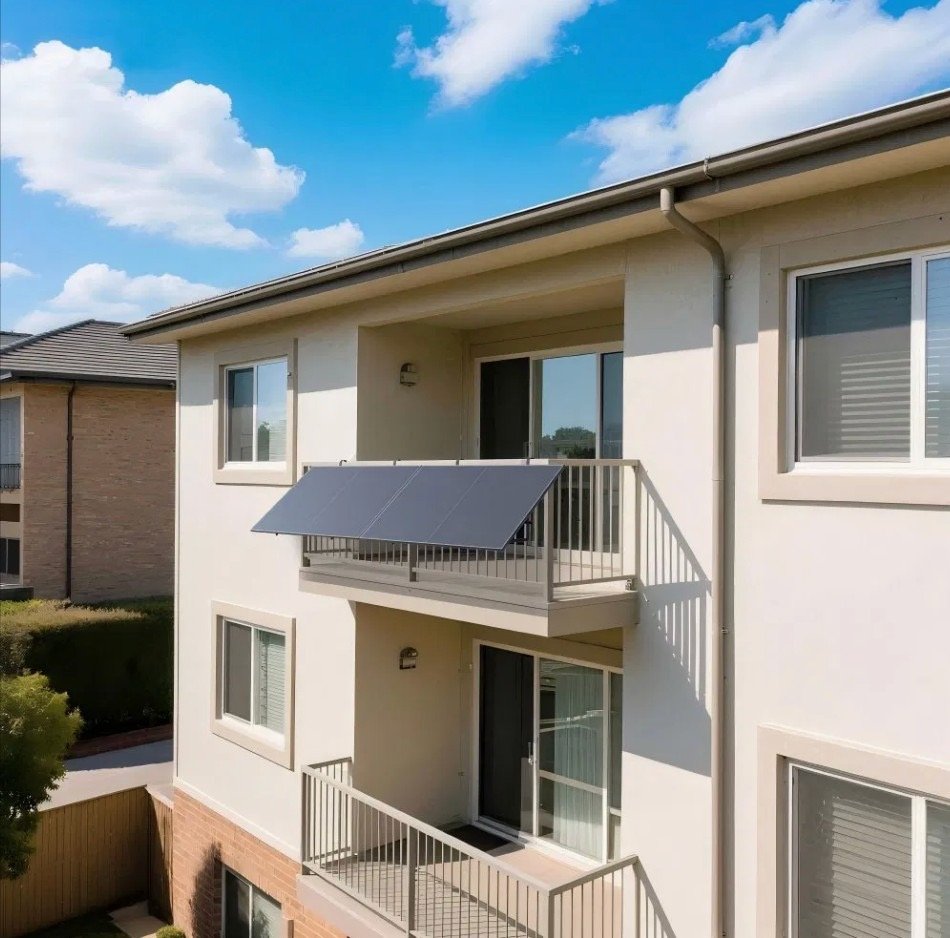
Illustrative balcony mount — not a specific kit on sale. Always match the model on a listing to the ENA register before you buy, and check you have consent for the railing.
- Complete kits, not loose parts — a compliant listing should include the panels, the micro-inverter with anti-islanding protection, the 13A lead and a mount.
- Outdoor socket, not a kitchen adaptor — the plug is designed for a suitable outdoor 13A outlet on a circuit with the right RCD protection.
- No electrician for the plug itself — you still need a sound socket, a safe mounting point, and any consent the building requires.
- You register it — buyers are required to register the device after purchase so the grid operator can see what is connected, and G98 notification still applies.
Grid power vs a plug-in kit in daylight
| Drawing everything from the grid | With a compliant 800W kit in sun | |
|---|---|---|
| Roof work | None | None — garden, fence or approved balcony mount |
| Typical output cap | — | ~800W AC (UK specification) |
| When it helps | — | Daylight hours, while something in the house is using power |
| Night / heavy cloud | Grid as usual | Grid as usual, unless you add a battery |
| Who it is aimed at | — | Flats, renters, homes that cannot take rooftop PV |
Figures for generation and bill saving come from DESNZ and Energy Saving Trust examples, not from a HearthWise lab test. Results vary. Availability, prices and specifications are set by the retailer.
What a typical afternoon of fitting looks like
- Check the listing against the register. Open the ENA Connect Direct type-test register, filter to “Plug-in Solar”, and match the exact model code. “Compliant” is the status you want — not merely “listed”.
- Confirm you are allowed to put it there. Landlord, freeholder, building manager, planning or listed-building consent can all apply. Timber balcony decks and cladding are a separate no in the specification and in planning.
- Use a proper outdoor socket. Follow the kit instructions. If the outlet is old, cracked, or not RCD-protected, stop and get the electrics checked before you plug a generator into it.
- Mount, plug in, register. Sit the panel where it will actually see the sky, complete the UK plug-in solar registration, and keep the paperwork. That is the legal side of using it, not an optional extra.
Who it is actually worth thinking about
The useful case is a household that cannot do a roof job: a rented flat with a south-facing garden or a solid balcony that the freeholder will approve; a leasehold where the roof is common parts; a house where scaffolding and an MCS installer are simply not happening this year.
It is a weaker case if you already have a large rooftop array, if the only outdoor space is north-facing and heavily shaded, or if you were hoping it would run the whole house after dark. An 800W cap is a slice of a typical load, not a miniature power station.
Energy Secretary Miatta Fahnbulleh put the policy case in one line: a simpler way for more families to generate some of their own power. The small print is still the small print — permissions, a compliant kit, a safe socket, and registration.
Frequently asked questions
Do I need a new roof or an electrician to fit one?
You do not need scaffolding or a roof array. You do need a suitable outdoor 13A socket, a safe place to mount the panel, and any consent the building requires. If the socket is not up to it, that is an electrician's job before you plug the kit in.
Is it legal in Northern Ireland?
The August 2026 change covers Great Britain. Northern Ireland may follow once its regulations are updated. Do not assume a GB-legal kit is automatically legal to use there.
Will it take £110 off my bill?
Up to £110 a year is a DESNZ illustration, not a promise for your meter. The Energy Saving Trust's example generation figure is around 700 kWh a year for a well-sited 800W system. Your tariff, shade and daytime use decide the rest.
How do I know a kit is actually compliant?
Match the model on the product page to a Compliant record on the ENA type-test register for Plug-in Solar. Check the kit as a whole, not a bare inverter with a similar name. Look for the specification declaration and QR code on the label.
Where can I see current prices and pack sizes?
Availability, prices and specifications are set by the retailer and can change. Use the button below to open today's Plug-In Solar PV listing.
The bottom line
Plug-in solar will not turn a draughty terrace into a zero-bill home, and it will not stand in for insulation. What it can do — now that GB rules allow compliant kits — is cut a slice of daytime grid use for households that were locked out of rooftop PV. The job is to buy the registered kit, site it where the sun actually lands, and treat the savings figures as a range, not a guarantee.
Check availability now →This is a paid advertorial. HearthWise may earn a commission from purchases made through the link above, at no extra cost to you. See our About & Contact page for more on how we work.